
Last updated:
07. July, 2026
Written by Max Schubert

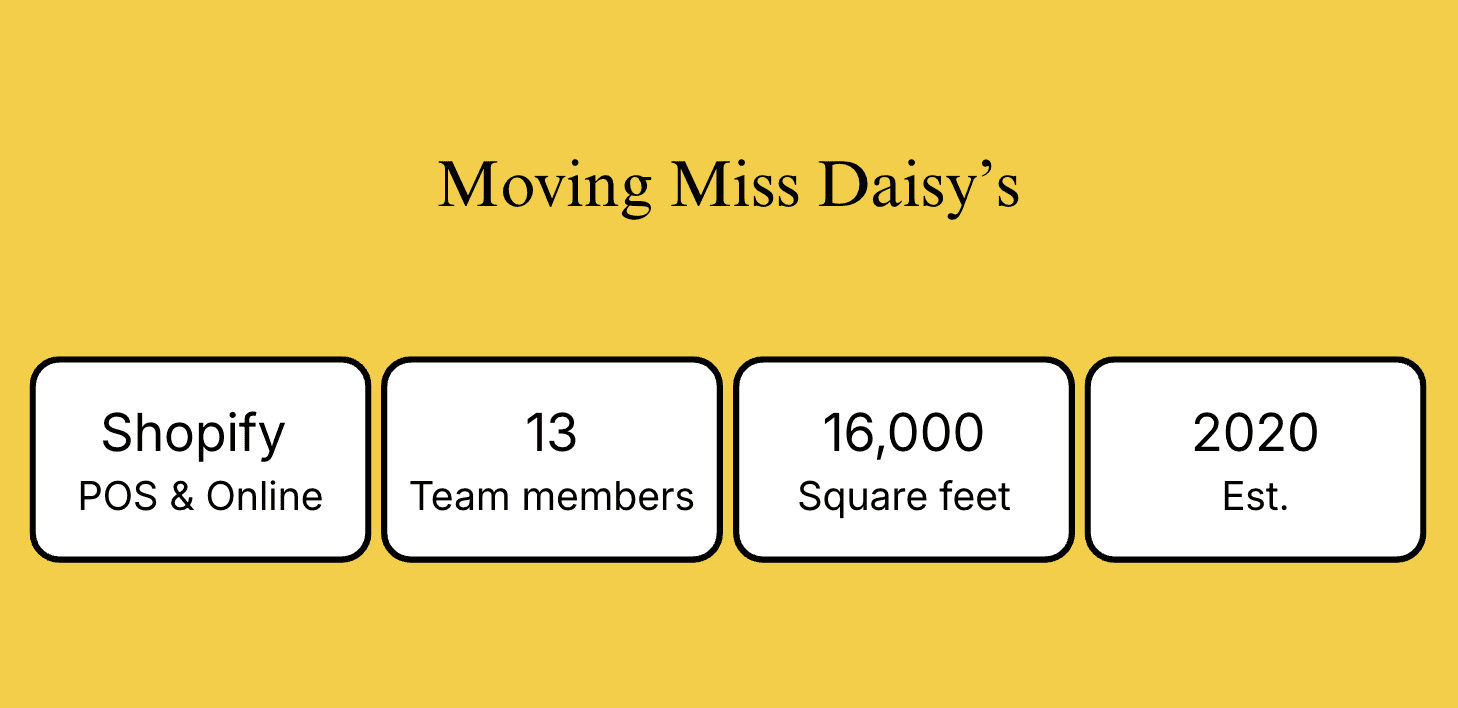
Glenn Novack has run Miss Daisy's Consignment & Auction House in California, Santa Barbara since 2020. The store fills 16,000 square feet — the largest consignment floor in the region. The range covers furniture, art, lighting and antiques.
In this story you will learn what years in furniture and home goods consignment taught Glenn about labor, workflow and who should be doing the work. And why the software behind the counter decides whether a furniture resale store is profitable or not.

Source: Team of Miss Daisy's Consignment & Auction House
1. From caregiving to Santa Barbara's largest consignment floor
Miss Daisy's started with a personal problem. For 13 years Glenn cared full-time for his mother while running two careers: planning events and dealing art and antiques.
When his mother moved into a retirement community, he packed up her house and was left with beautiful pieces that wouldn't fit the new place. What do you do with them?
His sister, Kathy, had the answer: turn the skills he already had — valuing, moving and placing belongings — into a service for other families facing the same transition. He named it after the film Driving Miss Daisy. Moving Miss Daisy launched in 2016 as a full-service senior downsizing and estate liquidation company.
The store came later. In July 2020 Glenn took over Finders Keepers, a small local consignment shop whose owner was retiring. It quickly outgrew its space, so he moved into the cavernous former Sears building at La Cumbre Plaza and filled 16,000 square feet with consignment furniture, art and décor — the biggest consignment floor in the region.
Today the operation spans the showroom, a Shopify online shop and live and online auctions. Stock arrives from estates in Montecito, Hope Ranch and the Santa Ynez Valley, and from movie studios. Steinway baby grands, carousel horses, Salvador Dalí prints and antique brass cash registers have all passed through.
It became an operational business fast. In a store built on one-of-a-kind pieces, the constraint was never finding stock. It was the labor to process it. That realization would eventually change how Glenn ran everything.
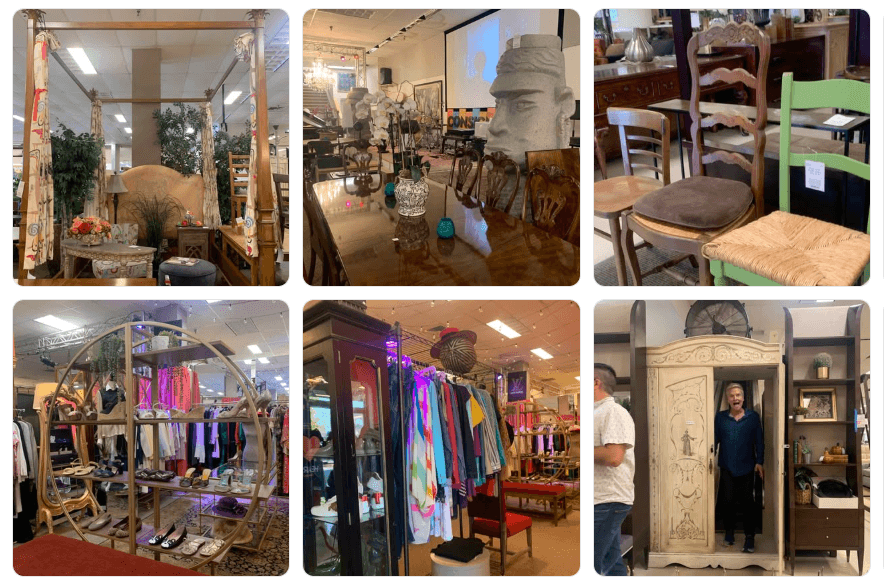
Source: Miss Daisy's Consignment & Auction House Facebook Page
2. The operational challenge of a furniture and home goods consignment house
Furniture consignment carries a problem that clothing resale does not: weight. A $40 lamp runs through nearly the same chain of steps as a $4,000 French desk.
But the desk has to be measured, photographed from every angle, researched by maker, picked up, moved, staged and eventually moved again. Low value or high value, common or one-of-a-kind, almost every item runs the full gauntlet:
Inquiry and item information
Photos, measurements and condition
Accept, decline or hold for review
Pickup, delivery or mover coordination
Receiving and condition check
Research and pricing
Inventory record, title, description, category
Tagging and a markdown schedule
Shopify sync and merchandising
Active management and price reductions
Sale across every channel
Payout and reporting
Every one of those steps is work. For his first five years Glenn ran the store on SimpleConsign and it built the business.
But as the store grew, his priorities shifted.
He did the math and reached a blunt conclusion: his single biggest expense was labor. Not rent, not stock — labor.
That sent him on a months-long search, hundreds of hours spent evaluating nearly every platform in the industry: SimpleConsign vs ConsignCloud vs Circle-Hand vs Ricochet vs Liberty REACT vs ConsignPro, even building his own Shopify inventory setups with AI and no-code. He was not looking for prettier screens or a longer feature list.
He was shopping for a workflow that removed work.
3. A consignment workflow for furniture shaped by one question: who should be doing this?
Glenn's turning point was a change of question. For years he compared software by asking, "What features does this have?" He started asking instead, "How much work does this eliminate?"
To answer it, he did an exercise worth stealing. He set the software aside, took a blank sheet of paper and wrote down every step from a consignor's first contact to their final payout.
The list was long and once it existed, one thing became obvious. Every task on it belonged to one of 4 participants, and most of them didn't belong to his staff.
The consignor should provide what only they know: contact and payment details, photos, measurements, descriptions and a signature.
The software should handle the repetitive mechanics: creating records, syncing sales channels, tracking status, sending notifications, calculating payouts.
AI should do the repetitive thinking: identifying items, suggesting categories, drafting titles and descriptions, generating keywords, assisting with price.
His employees should spend their time where people actually add value: building the customer relationships and final quality control.
That framework reshaped the whole intake. The old process ran very manual: customers sending oversized photos across 3 separate messages, forgetting measurements, leaving descriptions half-finished, while staff retyped it all into another system before anyone had even decided whether they wanted the item. The new process moved it into one place:
Step 1 — Self-service onboarding.
The consignor creates their own account, enters their own contact and payment information, uploads photos, adds measurements and descriptions, and signs the agreement digitally — all in one portal, before staff touch anything.
Step 2 — Review and decision.
Items are accepted, declined or held for review, and the customer is notified automatically, along with pickup, delivery or mover instructions.
Step 3 — Research and pricing.
Staff identify the maker or artist, check comparable sales, and set a price and markdown schedule, while AI drafts titles, descriptions and categories and assists on price.
Step 4 — Lifecycle on autopilot.
The inventory record syncs to Shopify and the POS, tags print, the markdown schedule runs, and automated emails handle every milestone — accepted, declined, sold, expired, paid out. A photo of the item stays attached at every stage, so no one opens a second screen to see what they're pricing or reporting on.
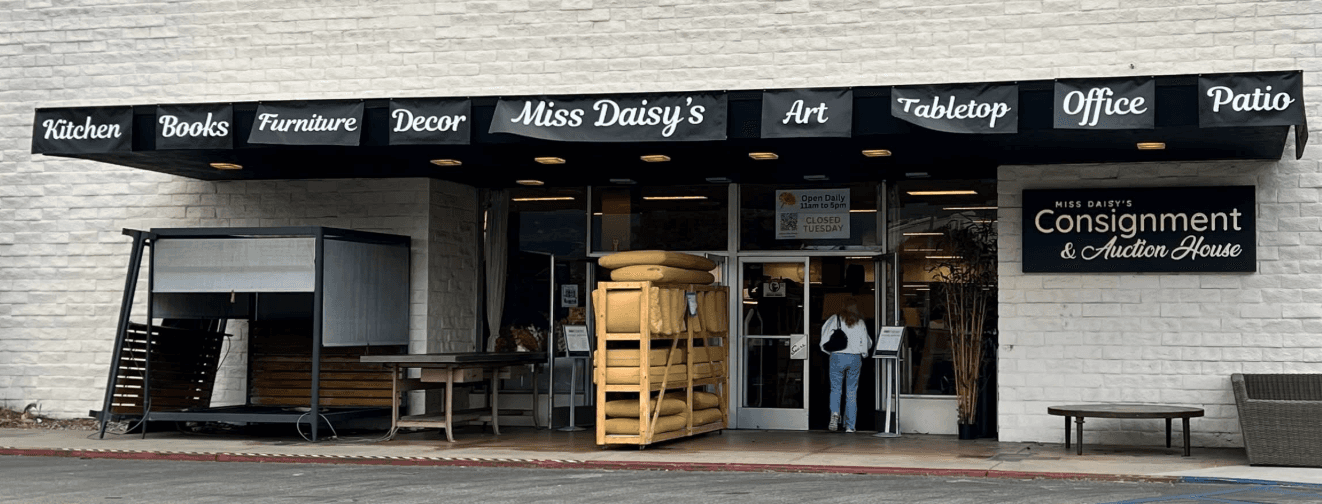
Source: Miss Daisy's Consignment & Auction House Facebook Page
4. Why Miss Daisy's chose Circle-Hand for their furniture consignment workflows
By the time Glenn finished evaluating, three capabilities mattered to him more than anything else.
Customer self-service — so his team never retypes information the customer already knows.
Workflow automation — accepted, declined, sold, expired and payout emails that each save a few minutes and together save hours every week.
Photos throughout — every item visible at every stage, from pricing to aging reports, without clicking away.
Circle-Hand lined up with those priorities, plus AI-assisted item entry, a deep Shopify integration and a development team that is doing weekly updates based on feedback. Glenn is clear-eyed about the trade: some larger, older platforms still do things Circle-Hand is only now building.
He didn't switch because it had every feature. He switched because it removed the most labor from the workflow he'd already mapped.
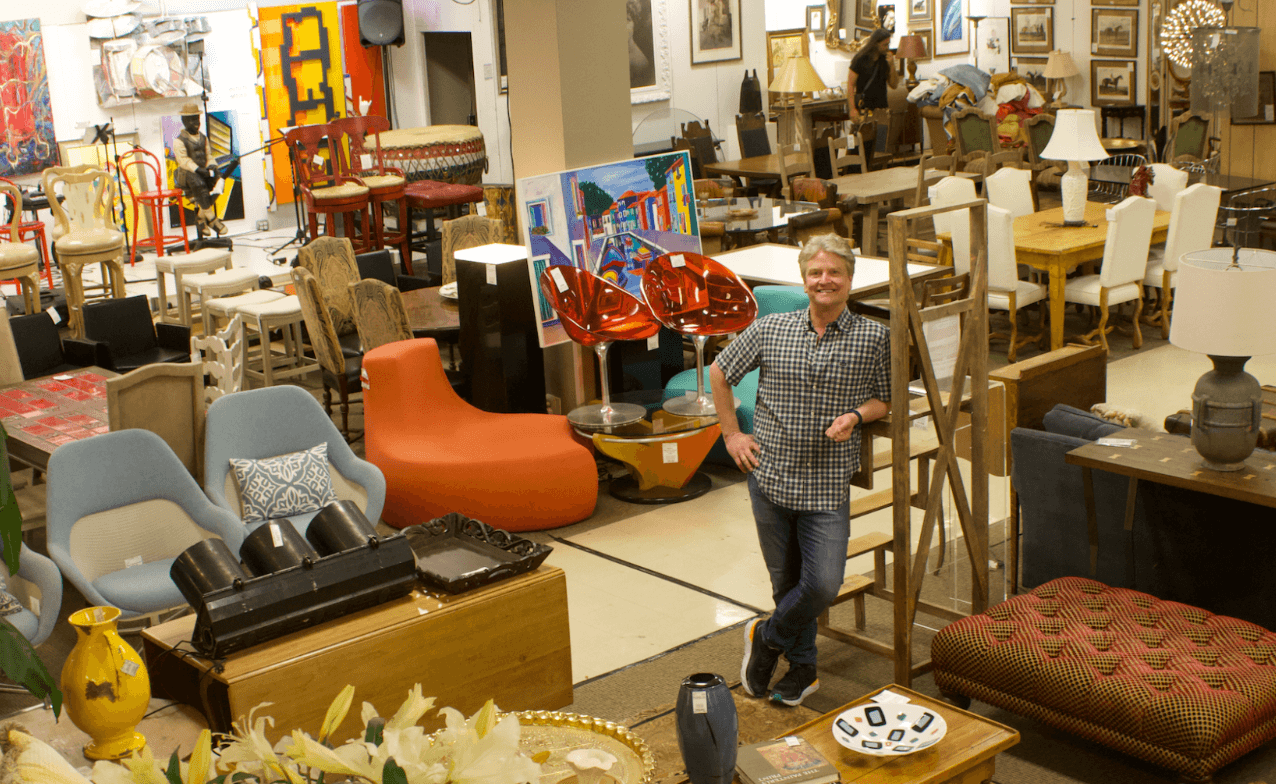
Source: Miss Daisy's Consignment & Auction House Facebook Page
Glenn is a store owner who spent hundreds of hours solving a labor problem. Nothing was wrong with what he had before; his business simply reached a point where cutting labor mattered more than adding features.
That's the part furniture resale owners can put to work. In a store full of heavy, high-value, one-of-a-kind pieces, the temptation is to compete on inventory. The real margin is in the workflow.
Before you compare another feature list, map your own process end to end and ask the four questions Glenn asks of every step: should the customer be doing this, should the software, should AI or should one of my people?
Most owners find their most expensive employees are spending the day on work that was never theirs to do.

Btw margeregeling voor tweedehandswinkels uitgelegd - Inclusief online calculator
Support for various content types such as articles, blogs, videos, and more. Rich text editor with formatting options for enhanced.
24 August, 2024

How Loop Generation handles 10,000+ pre-loved designer items with Circle-Hand
Support for various content types such as articles, blogs, videos, and more. Rich text editor with formatting options for enhanced.
18. November, 2025

From Pop-Up to Vendor Marketplace: The Story of All Over The Shop
Support for various content types such as articles, blogs, videos, and more. Rich text editor with formatting options for enhanced.
18. November, 2025